Friday, February 5, 2016

XXXIV.


CHAPTER 7  of DRACULA, by Bram Stoker

CUTTING FROM "THE DAILYGRAPH", 8 AUGUST

(PASTED IN MINA MURRAY'S JOURNAL)

From a correspondent.

Whitby.

"One of the greatest and suddenest storms on record has just been experienced here, with results both strange and unique. The weather had been somewhat sultry, but not to any degree uncommon in the month of August. Saturday evening was as fine as was ever known, and the great body of holiday-makers laid out yesterday for visits to Mulgrave Woods, Robin Hood's Bay, Rig Mill, Runswick, Staithes, and the various trips in the neighborhood of Whitby. The steamers Emma and Scarborough made trips up and down the coast, and there was an unusual amount of `tripping' both to and from Whitby. The day was unusually fine till the afternoon, when some of the gossips who frequent the East Cliff churchyard, and from the commanding eminence watch the wide sweep of sea visible to the north and east, called attention to a sudden show of `mares tails' high in the sky to the northwest. The wind was then blowing from the south-west in the mild degree which in barometrical language is ranked `No. 2, light breeze.'


The coastguard on duty at once made report, and one old fisherman, who for more than half a century has kept watch on weather signs from the East Cliff, foretold in an emphatic manner the coming of a sudden storm. The approach of sunset was so very beautiful, so grand in its masses of splendidly coloured clouds, that there was quite an assemblage on the walk along the cliff in the old churchyard to enjoy the beauty. Before the sun dipped below the black mass of Kettleness, standing boldly athwart the western sky, its downward way was marked by myriad clouds of every sunset colour, flame, purple, pink, green, violet, and all the tints of gold, with here and there masses not large, but of seemingly absolute blackness, in all sorts of shapes, as well outlined as colossal silhouettes. The experience was not lost on the painters, and doubtless some of the sketches of the `Prelude to the Great Storm' will grace the R. A and R. I. walls in May next.


More than one captain made up his mind then and there that his `cobble' or his `mule', as they term the different classes of boats, would remain in the harbour till the storm had passed. The wind fell away entirely during the evening, and at midnight there was a dead calm, a sultry heat, and that prevailing intensity which, on the approach of thunder, affects persons of a sensitive nature.

There were but few lights in sight at sea, for even the coasting steamers, which usually hug the shore so closely, kept well to seaward, and but few fishing boats were in sight. The only sail noticeable was a foreign schooner with all sails set, which was seemingly going westwards. The foolhardiness or ignorance of her officers was a prolific theme for comment whilst she remained in sight, and efforts were made to signal her to reduce sail in the face of her danger. Before the night shut down she was seen with sails idly flapping as she gently rolled on the undulating swell of the sea.

"As idle as a painted ship upon a painted ocean."


Shortly before ten o'clock the stillness of the air grew quite oppressive, and the silence was so marked that the bleating of a sheep inland or the barking of a dog in the town was distinctly heard, and the band on the pier, with its lively French air, was like a dischord in the great harmony of nature's silence. A little after midnight came a strange sound from over the sea, and high overhead the air began to carry a strange, faint, hollow booming.

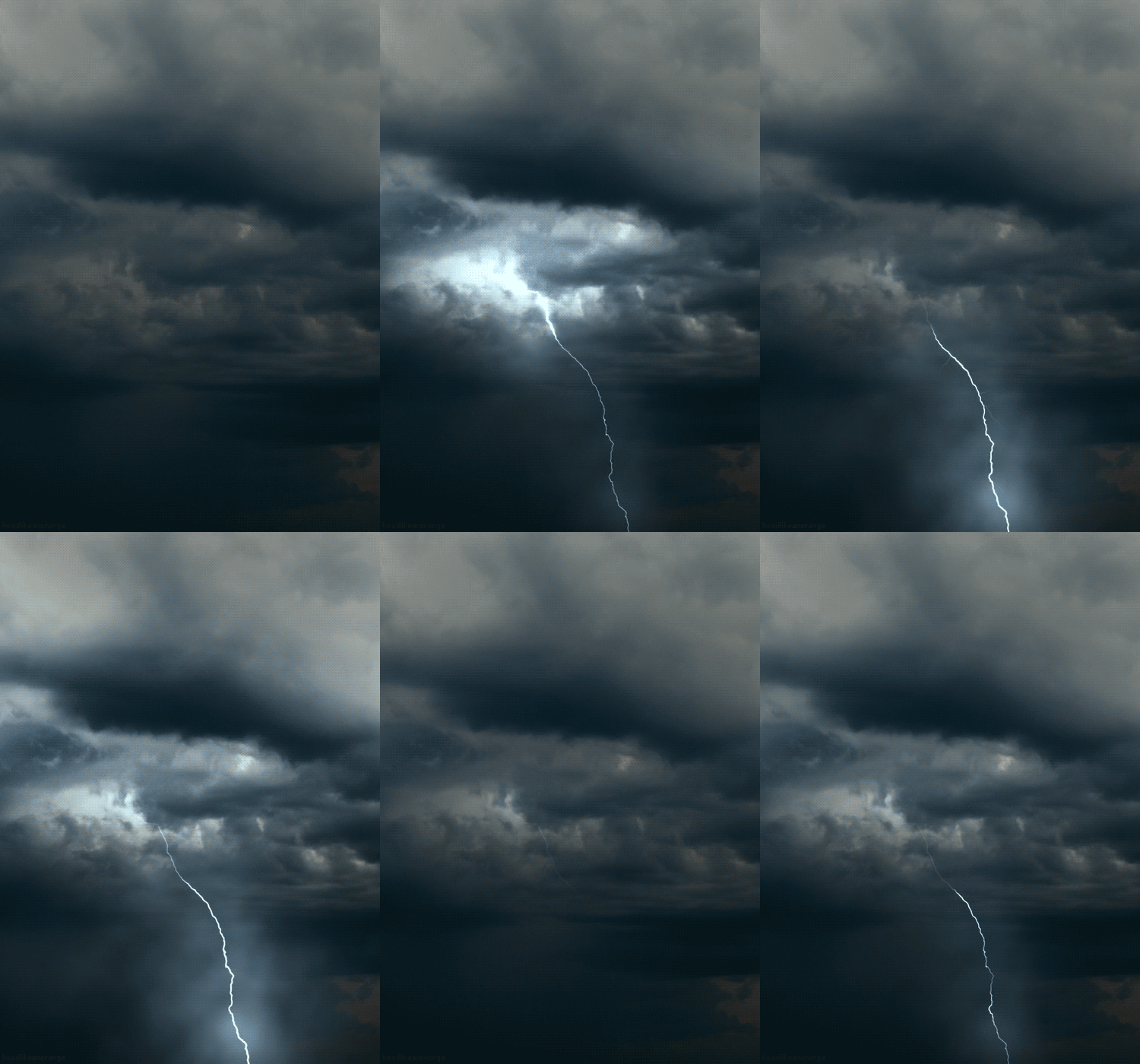
Then without warning the tempest broke. With a rapidity which, at the time, seemed incredible, and even afterwards is impossible to realize, the whole aspect of nature at once became convulsed. The waves rose in growing fury, each over-topping its fellow, till in a very few minutes the lately glassy sea was like a roaring and devouring monster. White-crested waves beat madly on the level sands and rushed up the shelving cliffs. Others broke over the piers, and with their spume swept the lanthorns of the lighthouses which rise from the end of either pier of Whitby Harbour.


The wind roared like thunder, and blew with such force that it was with difficulty that even strong men kept their feet, or clung with grim clasp to the iron stanchions. It was found necessary to clear the entire pier from the mass of onlookers, or else the fatalities of the night would have increased manifold. To add to the difficulties and dangers of the time, masses of sea-fog came drifting inland. White, wet clouds, which swept by in ghostly fashion, so dank and damp and cold that it needed but little effort of imagination to think that the spirits of those lost at sea were touching their living brethren with the clammy hands of death, and many a one shuddered as the wreaths of sea-mist swept by.


At times the mist cleared, and the sea for some distance could be seen in the glare of the lightning, which came thick and fast, followed by such peals of thunder that the whole sky overhead seemed trembling under the shock of the footsteps of the storm.

Some of the scenes thus revealed were of immeasurable grandeur and of absorbing interest. The sea, running mountains high, threw skywards with each wave mighty masses of white foam, which the tempest seemed to snatch at and whirl away into space. Here and there a fishing boat, with a rag of sail, running madly for shelter before the blast, now and again the white wings of a storm-tossed seabird. On the summit of the East Cliff the new searchlight was ready for experiment, but had not yet been tried. The officers in charge of it got it into working order, and in the pauses of onrushing mist swept with it the surface of the sea. Once or twice its service was most effective, as when a fishing boat, with gunwale under water, rushed into the harbour, able, by the guidance of the sheltering light, to avoid the danger of dashing against the piers. As each boat achieved the safety of the port there was a shout of joy from the mass of people on the shore, a shout which for a moment seemed to cleave the gale and was then swept away in its rush.


Before long the searchlight discovered some distance away a schooner with all sails set, apparently the same vessel which had been noticed earlier in the evening. The wind had by this time backed to the east, and there was a shudder amongst the watchers on the cliff as they realized the terrible danger in which she now was.

Between her and the port lay the great flat reef on which so many good ships have from time to time suffered, and, with the wind blowing from its present quarter, it would be quite impossible that she should fetch the entrance of the harbour.


It was now nearly the hour of high tide, but the waves were so great that in their troughs the shallows of the shore were almost visible, and the schooner, with all sails set, was rushing with such speed that, in the words of one old salt, "she must fetch up somewhere, if it was only in hell". Then came another rush of sea-fog, greater than any hitherto, a mass of dank mist, which seemed to close on all things like a gray pall, and left available to men only the organ of hearing, for the roar of the tempest, and the crash of the thunder, and the booming of the mighty billows came through the damp oblivion even louder than before. The rays of the searchlight were kept fixed on the harbour mouth across the East Pier, where the shock was expected, and men waited breathless.


The wind suddenly shifted to the northeast, and the remnant of the sea fog melted in the blast. And then, mirabile dictu, between the piers, leaping from wave to wave as it rushed at headlong speed, swept the strange schooner before the blast, with all sail set, and gained the safety of the harbour. The searchlight followed her, and a shudder ran through all who saw her, for lashed to the helm was a corpse, with drooping head, which swung horribly to and fro at each motion of the ship. No other form could be seen on the deck at all.


A great awe came on all as they realised that the ship, as if by a miracle, had found the harbour, unsteered save by the hand of a dead man! However, all took place more quickly than it takes to write these words. The schooner paused not, but rushing across the harbour, pitched herself on that accumulation of sand and gravel washed by many tides and many storms into the southeast corner of the pier jutting under the East Cliff, known locally as Tate Hill Pier.


There was of course a considerable concussion as the vessel drove up on the sand heap. Every spar, rope, and stay was strained, and some of the `top-hammer' came crashing down. But, strangest of all, the very instant the shore was touched, an immense dog sprang up on deck from below, as if shot up by the concussion, and running forward, jumped from the bow on the sand.


Making straight for the steep cliff, where the churchyard hangs over the laneway to the East Pier so steeply that some of the flat tombstones, thruffsteans or through-stones, as they call them in Whitby vernacular, actually project over where the sustaining cliff has fallen away, it disappeared in the darkness, which seemed intensified just beyond the focus of the searchlight.

It so happened that there was no one at the moment on Tate Hill Pier, as all those whose houses are in close proximity were either in bed or were out on the heights above. Thus the coastguard on duty on the eastern side of the harbour, who at once ran down to the little pier, was the first to climb aboard. The men working the searchlight, after scouring the entrance of the harbour without seeing anything, then turned the light on the derelict and kept it there. The coastguard ran aft, and when he came beside the wheel, bent over to examine it, and recoiled at once as though under some sudden emotion. This seemed to pique general curiosity, and quite a number of people began to run.


It is a good way round from the West Cliff by the Draw-bridge to Tate Hill Pier, but your correspondent is a fairly good runner, and came well ahead of the crowd. When I arrived, however, I found already assembled on the pier a crowd, whom the coastguard and police refused to allow to come on board. By the courtesy of the chief boatman, I was, as your correspondent, permitted to climb on deck, and was one of a small group who saw the dead seaman whilst actually lashed to the wheel.


It was no wonder that the coastguard was surprised, or even awed, for not often can such a sight have been seen. The man was simply fastened by his hands, tied one over the other, to a spoke of the wheel. Between the inner hand and the wood was a crucifix, the set of beads on which it was fastened being around both wrists and wheel, and all kept fast by the binding cords. The poor fellow may have been seated at one time, but the flapping and buffeting of the sails had worked through the rudder of the wheel and had dragged him to and fro, so that the cords with which he was tied had cut the flesh to the bone.

Accurate note was made of the state of things, and a doctor, Surgeon J. M. Caffyn, of 33, East Elliot Place, who came immediately after me, declared, after making examination, that the man must have been dead for quite two days.

In his pocket was a bottle, carefully corked, empty save for a little roll of paper, which proved to be the addendum to the log.

The coastguard said the man must have tied up his own hands, fastening the knots with his teeth. The fact that a coastguard was the first on board may save some complications later on, in the Admiralty Court, for coastguards cannot claim the salvage which is the right of the first civilian entering on a derelict. Already, however, the legal tongues are wagging, and one young law student is loudly asserting that the rights of the owner are already completely sacrificed, his property being held in contravention of the statues of mortmain, since the tiller, as emblemship, if not proof, of delegated possession, is held in a dead hand.


It is needless to say that the dead steersman has been reverently removed from the place where he held his honourable watch and ward till death, a steadfastness as noble as that of the young Casabianca, and placed in the mortuary to await inquest.


Already the sudden storm is passing, and its fierceness is abating. Crowds are scattering backward, and the sky is beginning to redden over the Yorkshire wolds.

I shall send, in time for your next issue, further details of the derelict ship which found her way so miraculously into harbour in the storm."


Saturday, January 30, 2016

XXXIII.


The Rain Was Ending, And Light 

by Laurence Binyon


The rain was ending, and light
Lifting the leaden skies.
It shone upon ceiling and floor
And dazzled a child's eyes.

Pale after fever, a captive
Apart from his schoolfellows,
He stood at the high room's window
With face to the pane pressed close,

And beheld an immense glory
Flooding with fire the drops
Spilled on miraculous leaves
Of the fresh green lime-tree tops.

Washed gravel glittered red
To a wall, and beyond it nine
Tall limes in the old inn yard
Rose over the tall inn sign.

And voices arose from beneath
Of boys from school set free,
Racing and chasing each other
With laughter and games and glee.

To the boy at the high room-window,
Gazing alone and apart,
There came a wish without reason,
A thought that shone through his heart.

I'll choose this moment and keep it,
He said to himself, for a vow,
To remember for ever and ever
As if it were always now.


Credit: Images:  chron.com

Tuesday, December 22, 2015

XXXI.


Beloved, Let Us Once More Praise The Rain 
by Conrad Aiken


Beloved, let us once more praise the rain.

Let us discover some new alphabet,

For this, the often praised; and be ourselves,

The rain, the chickweed, and the burdock leaf,

The green-white privet flower, the spotted stone,

And all that welcomes the rain; the sparrow too,—

Who watches with a hard eye from seclusion,

Beneath the elm-tree bough, till rain is done.

There is an oriole who, upside down,

Hangs at his nest, and flicks an orange wing,

—Under a tree as dead and still as lead;

There is a single leaf, in all this heaven

Of leaves, which rain has loosened from its twig:

The stem breaks, and it falls, but it is caught

Upon a sister leaf, and thus she hangs;

There is an acorn cup, beside a mushroom

Which catches three drops from the stooping cloud.

The timid bee goes back to the hive; the fly

Under the broad leaf of the hollyhock

Perpends stupid with cold; the raindark snail

Surveys the wet world from a watery stone...

And still the syllables of water whisper:

The wheel of cloud whirs slowly: while we wait

In the dark room; and in your heart I find

One silver raindrop,—on a hawthorn leaf,—

Orion in a cobweb, and the World.

Tuesday, November 17, 2015

XXX.

Weather Idioms and Weather Lore


"as right as rain" ~ means that everything is just fine or going well."

"billy wind" ~ used primarily in England, referring to a blustery, howling wind.

"bolt from the clear blue sky" ~ something [usually wonderful or horribly tragic] has happened and it is sudden and unexpected.

"break the ice" or "ice breaker" ~ is the means in which someone opens up a conversation, generally to make others feel more relaxed or at ease.

"buzzards flying high indicate fair weather" ~ weather lore

"calm before the storm" ~ an unnatural lull or calm before an eruption of emotion or activity.

"chasing rainbows" ~ to try to find or get something that cannot be obtained.

"chill wind [of]" ~ to have fore-knowledge of trouble or a problem.

"cloud on the horizon" ~ this means you can expect trouble in the near future.

"cold light of day" ~ being grounded in reality, seeing things as they really are.

"come rain or shine" - pertaining to a personal goal or to achieve success, that no matter what it will be accomplished.

"comets bring cold weather" ~ weather lore

"don't have the foggiest idea" ~ having no knowledge of a person, place or thing.

"dry spell" ~ being unsuccessful for any length of time, abnormally.

"every cloud has a silver lining" ~ there is always good in a bad situation.

"face like thunder" ~ pertains to identifying someone, by reading the signs in their face, that they are very upset or angry.

"fair weather friend" ~ a person whom you engage infrequently, they are usually unreliable, and there are conditions attached the friendship.

"get wind of" ~ to be privy to information that should have been kept secret.

"greased lightening" ~ an event or moment that is happening extremely fast.

"head in the clouds" ~ not having one's mind on the topic at hand.

"if shooting stars fall in the south in winter, there will be a thaw" ~ weather lore

"in the dark" ~ to be left without information, to be uninformed, or without knowledge of an event, or a situation or problem.

"in the eye of the storm" ~ in the center of, or otherwise deeply involved in a problem or difficult situation.

"into each life, rain must fall" ~ something bad will happen to each and every one of us.

"it never rains, but it pours" ~ a small situation or problem becomes exacerbated by more trouble or problems.

"Jack Frost" ~ when all of outdoors is frozen, [weather lore], then Jack Frost has paid the region a visit.

"know which way the wind blows" ~ being able to judge someone's mood, or to prepare for changes in a situation.

"knows enough to come out of the rain" ~ may refer to someone who is stupid, or un-knowledgeable, but they have the sense enough to seek shelter or safety when a situation or event turns bad, or is imminent.

"left out in the rain" ~ to be left out of a problem or situation, without support or assistance.

"lightning under the North Star will bring rain in three days" ~ weather lore

"Mackerel skies and mares' tails; Make tall ships take in their sails." ~ Cirrus scattering clouds often follow warm weather that brings rain.

"make hay while the sun still shines" ~ to take advantage of a period of time or a situation as it may not last.

"on cloud nine" ~ a feeling of elation or extreme happiness.

"on a pink cloud" ~ a feeling of elation or extreme happiness - often used when one first begins recovery [from alcoholism] and are sober, one may experience extreme happiness, but are often not grounded or facing reality.

"once in a blue moon" ~ an event that occurs only very rarely.

"one crow flying alone is a sign of foul weather; but if crows fly in pairs, expect fine weather" ~weather lore

"pink at night, sailor's delight; pink in the morning, sailor's take warning" ~ or the idiom may use the color red, in place of pink.  [Weather Lore] Pink at night is predicting that fair weather will occur the next day; however, pink in the morning cautions the viewer that rain or a storm may be imminent.

"rainbow to windward, foul fall the day; rainbow to leeward, rain runs away." ~ If wind is coming from the direction of a rainbow, then, rain is heading toward you. Likewise, if the rainbow is in the opposite direction, it has passed by you.

"raindrop in a drought" ~ to wait or hope for something to happen.

"rain on my parade" ~ to ruin or spoil something planned; or to usurp another's plans or event.

"rain on wet" - to make a situation worse.

"raining cats and dogs" ~ to rain very heavily.

"ray of sunshine" ~ to bring happiness or hope to a situation.

"reach for the moon" ~ to be very ambitious, to set your personal standards or goals very high and hope to obtain success.

"right as rain" ~ everything is going as planned.

"save for a rainy day" ~ to save something - usually money - for an unplanned event or unexpected debt.

"sail close to the wind" ~ means that someone may be doing something that is barely legal or somewhat dangerous.

"seagull, seagull, sit on the sand; it's a sign of rain when you are at hand" ~ birds tend to roost before a storm or hurricane.  It is believed that it may be difficult for a bird to take-off when there is low pressure, or when the air has become thinner as the updrafts are lessened.

"seven sheets to the wind" ~ means a person is very drunk.

"shoot the breeze" ~ to converse in a casual or relaxed way.

"snowed under" ~ pertains to having so much work to do, it feels impossible to get through it all.

"steal my thunder" ~ to take the attention away from someone else.

"storm in a teacup" ~ to make a fuss or a problem out of something that is not important

"storm is brewing" ~ you believe that there may be trouble, anger or outbursts of emotion.

"stormy relationship" ~ usually pertains to an intimate relationship, during which many arguments or disagreements occur.

"take a rain check" ~ you will return later, but cannot take an immediate invitation or offer to do something or to be somewhere at an appointed time.

"tempest in a teapot" ~ to exaggerate an event  in an attempt to make it worse.

"there is something in the wind" ~ someone may suspect that something important, or significant is about to happen.

"throw caution to the wind" ~ to forget planned commitments and do something wild and crazy or unexpected.

"twisting in the wind" ~ to be left alone and without assistance.

"two full moons in a calendar month bring on a flood" ~weather lore

"under a cloud" ~ in disgrace or under suspicion.

"under the weather" ~ to feel sickly or ill; not feeling "yourself" on a particular day.

"weather the storm" ~ to be successful upon surviving a difficult situation, period of time or problem.

"when halo rings the moon or sun; rain's approaching on the run." ~ A halo is caused by ice crystals that forms a clouds that indicate warm weather and predicts rain within a day.

"when leaves fall early, autumn and winter will be mild; when leave fall later, winter will be severe" ~ weather lore

"when porpoises and whales spout about ships at sea, storm may be expected" ~weather lore

"when windows won't open, and the salt clogs the shaker, the weather will favor the umbrella maker" ~ moisture in the air is very heavy, and rain is imminent.

"wind from the south, has rain in its mouth" ~ southerly winds usually blow before a cold front occurs, after which rain will generally happen in the east.


Wednesday, November 4, 2015

XXIX


KATHY'S SONG

I hear the drizzle of the rain
Like a memory it falls
Soft and warm continuing
Tapping on my roof and walls

And from the shelter of my mind
Through the window of my eyes
I gaze beyond the rain-drenched streets
To England, where my heart lies

My mind’s distracted and diffused
My thoughts are many miles away
They lie with you when you’re asleep
And kiss you when you start your day

And a song I was writing is left undone
I don’t know why I spend my time
Writing songs I can’t believe
With words that tear and strain to rhyme

And so you see, I have come to doubt
All that I once held as true
I stand alone without beliefs
The only truth I know is you

And as I watch the drops of rain
Weave their weary paths and die
I know that I am like the rain
There but for the grace of you go I

© 1965 Words and Music by Paul Simon

Tuesday, October 13, 2015

XXVIII.


“It is a strange world, a sad world, a world full of miseries, and woes, and troubles. 


And yet when King Laugh come, he make them all dance to the tune he play. 


Bleeding hearts, and dry bones of the churchyard, and tears that burn as they fall, all dance together to the music that he make with that smileless mouth of him. 


Ah, we men and women are like ropes drawn tight with strain that pull us different ways. 


Then tears come, and like the rain on the ropes, they brace us up, until perhaps the strain become too great, and we break. 


But King Laugh he come like the sunshine, and he ease off the strain again, and we bear to go on with our labor, what it may be.” 


Dr. Seward's recollection of his conversation w/ Van Helsing ― Bram Stoker, Dracula

Analysis:

"...generally seen as a flaw in the novel is the tone of a passage that follows Lucy’s death and burial. Dr. Seward records in his diary his conversation with Van Helsing, who makes a lengthy speech, known as the “King Laugh” speech, to explain his laughter at this apparently inappropriate time. His laughter is caused by Arthur’s statement that he felt married to Lucy following the blood transfusion Van Helsing performed. Van Helsing and Seward know, as Arthur does not, that Lucy also received transfusions from the two of them and Morris. The function of this passage is not clear, but it does seem to contain symbolically important ideas concerning blood and marriage."  Source: novelexplorer.com